




The Tea That Sparked a Revolution
When most people think of the Boston Tea Party, they picture colonists defiantly casting tea chests into the harbor under cover of night. Yet the tea itself is often overlooked, treated merely as background to a larger political drama. In truth, the cargo destroyed that evening was real, specific, and deeply woven into colonial life. These were not anonymous boxes of leaves. They contained the most familiar teas of the era—drinks served in homes, taverns, meeting rooms, and drawing rooms throughout colonial America.
On December 16, 1773, colonists boarded three ships anchored in Boston Harbor and destroyed 342 chests of tea, totaling more than 92,000 pounds. This was one of the most dramatic acts of protest in American history. But from a tea perspective, it was also the rejection of a beloved daily ritual.
Why Tea Mattered So Much in Colonial America
Tea in colonial America was more than a beverage. It was a marker of hospitality, refinement, routine, and comfort. To pour tea for a guest was to offer welcome. To gather around tea was to participate in one of the shared customs of the age.
The Tea Act of 1773 made imported tea less expensive, but it also reaffirmed Britain’s right to tax the colonies without representation. That contradiction transformed tea from a symbol of comfort into a symbol of control. What had once been a simple household staple now carried political meaning. To purchase or consume taxed tea was seen by many as acceptance of imperial authority.
In that moment, tea became personal, political, and powerful all at once.
The Five Historic Teas Dumped in the Boston Harbor
The tea destroyed that night included five principal varieties: Bohea, Congou, Souchong, Hyson, and Singlo. Each tells us something about the tastes and habits of colonial America.
🍂 Bohea Tea – The Tea of the People
The largest share of the cargo was Bohea, accounting for roughly seventy percent of all tea dumped into the harbor. Originating in the Wuyi Mountains of China’s Fujian Province, Bohea was the everyday black tea of the colonies. Affordable and approachable, it was consumed across social classes.
Households such as that of John Adams would have known teas like this well. Its flavor was smooth, earthy, mellow, and lightly roasted.
In modern terms, its closest equivalent is a classic Chinese black tea such as Keemun or English Breakfast teas. Bohea was, quite simply, the tea of the people.
🍂 Congou Tea – The Merchant’s Choice
Another important portion of the shipment was Congou, a name derived from gongfu, meaning skillful workmanship or disciplined craftsmanship. Congou referred to carefully produced Chinese teas prized for their quality and consistency.
It represented the more refined side of colonial tea culture, favored by merchants and households attentive to taste. Today, that spirit is beautifully expressed through Wu Yi Shan Rock Oolong Tea, also known as Yan Cha, grown in the mineral-rich cliffs of Fujian.
With its gentle roast, woody warmth, and mineral depth, it captures the elegance that Congou once represented. A figure such as Thomas Jefferson, known for his appreciation of global goods and cultivated taste, would have admired teas of this character.
Another similar tea to enjoy is the Duchess Breakfast.
🍂 Souchong Tea – The Harbor Smoke
The shipment also included Souchong, one of the most distinctive teas of the era. Known today through styles such as Lapsang Souchong, this tea was dried over pinewood fires, giving it a bold smoky aroma and warming finish.
It stood apart from softer household teas and likely appealed to drinkers who appreciated stronger flavors. In a bustling port city like Boston—where merchants, sailors, and artisans mingled—such a memorable tea would have felt right at home.
🍂 Hyson Tea – The Patriot’s Green
Among the green teas destroyed was Hyson, one of the most prized green teas in colonial America. Bright, lively, and more expensive than common black teas, Hyson was widely sought after and sometimes taxed at higher rates because of its popularity.
It is frequently associated with the tea preferences of George Washington, whose household records show purchases of green tea. Today, Young Dragon Hyson Green Tea continues that legacy with a robust body and gentle sweet lemon note. Hyson was a tea of distinction—fresh, energetic, and admired.
🍂 Singlo Tea – The Quiet Cup
Finally, there was Singlo, a lesser-known green tea that nonetheless formed part of the historic cargo. Though less celebrated in modern memory, Singlo likely served as a softer, everyday green tea enjoyed in quieter domestic settings.
Its modern spirit lives on through Zhen Mei, also known as Chun Mee or “precious eyebrow,” a pan-fired green tea with curved leaves, light vegetal sweetness, and a subtle toasted finish.
One can imagine such teas present in the thoughtful domestic world of Abigail Adams, where tea accompanied conversation, reflection, and household life.
Why Throwing Tea Into the Harbor Mattered
What made the destruction of these teas so meaningful was that they represented the full spectrum of colonial tea culture. Bohea was daily comfort. Congou was refinement. Souchong was bold character. Hyson was aspiration and taste. Singlo was quiet routine. To throw them into the harbor was to sacrifice not only money, but habit, pleasure, and familiarity in service of principle.
The Consequences of the Boston Tea Party
The consequences of the Boston Tea Party were immediate. Britain responded with the Intolerable Acts, closing Boston Harbor and imposing harsh restrictions on colonial governance and trade. These measures intensified resistance and helped push the colonies toward revolution. Yet there was another, quieter consequence: tea itself had to be reimagined.
The Rise of Liberty Tea
As imported tea was boycotted, many colonists turned to herbal substitutes made from local plants such as raspberry leaf, mint, linden flower, sage, and pine needles. These infusions became known as Liberty Teas. They were not exact replacements for Chinese tea, but they carried something equally important: independence. Colonial women played a central role in sustaining this movement. In kitchens and households, they determined what was brewed, served, and shared. Through everyday decisions, they transformed ideology into habit and preserved the ritual of tea in a new form.
In time, tea returned to American life. After independence, trade reopened through new channels, and tea gradually resumed its place as a beloved daily beverage. But it returned changed. No longer tied solely to British authority, tea became part of a broader American identity—one shaped by choice rather than control.
Taste the Story Today (in May 2026)
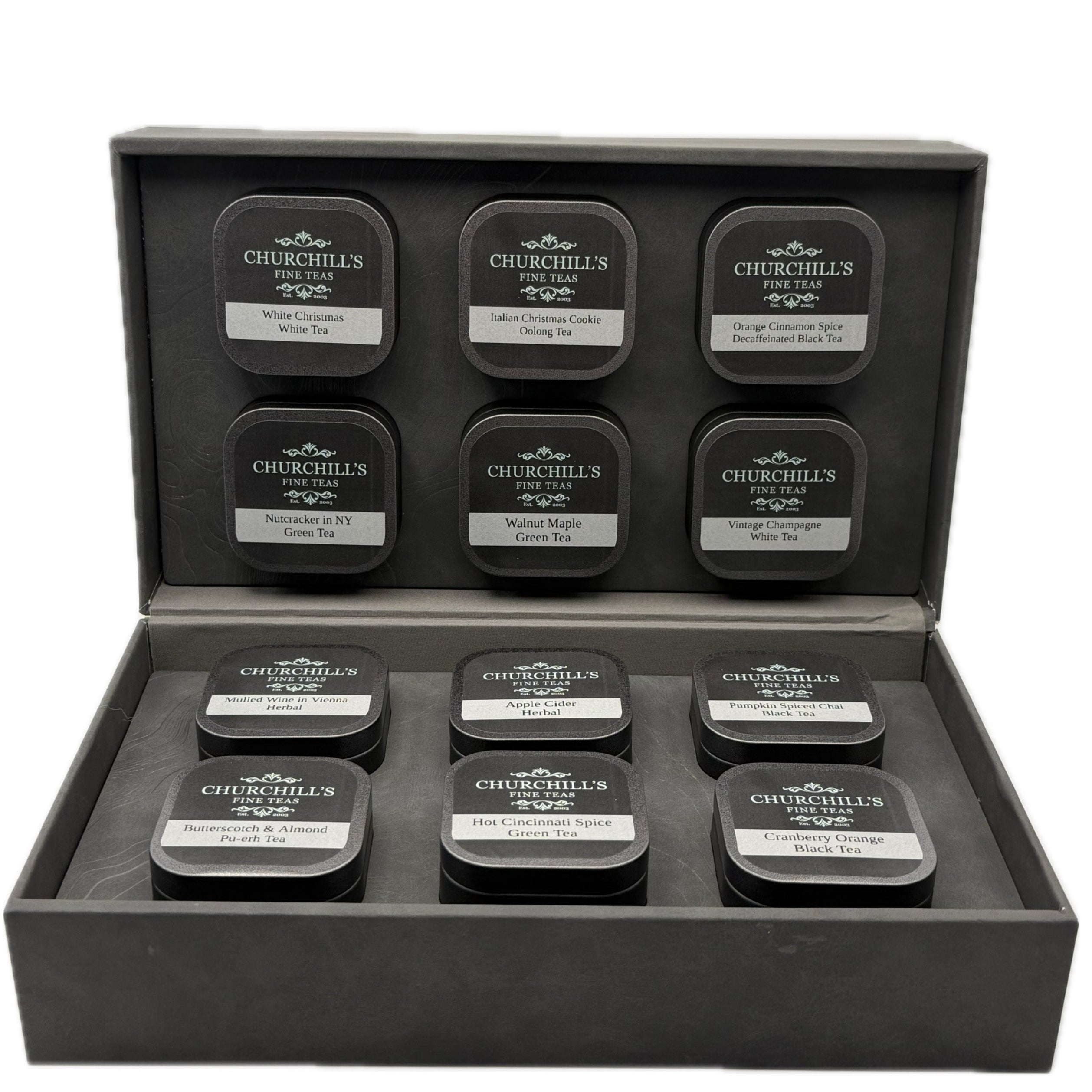
To honor that remarkable story, Churchill’s Fine Teas created the Founders’ Liberty Tea Collection – 1773 (Preorder Now), a commemorative seven-tea set featuring the five historic teas of the Boston Tea Party alongside two Liberty Tea herbal blends inspired by colonial America. Complete with a historical insert booklet, guided tasting experience, and narratives connecting each tea to history, the collection invites modern tea drinkers to taste the story of a nation in the making.
Final Pour
The Boston Tea Party was never just about tea taxes. It was about surrendering something cherished in pursuit of something greater.
Tea began as comfort, became a symbol, was rejected, reinvented, and eventually returned. That journey remains in every cup.
And now, you can taste it.
Discover Your Own Global Tea History Ritual
At Churchill’s Fine Teas, we celebrate the enduring traditions of tea, storytelling, and meaningful moments shared across generations. Explore our historic collections, globally inspired blends, and stories drawn from the tea cultures of England, China, India, Japan, Türkiye, Africa, South America, and beyond. Discover elegant teaware and gifts crafted for those who appreciate culture in every cup. Visit us in Cincinnati or click here to explore our Tea Stories Collections and The Journal.




Leave a comment